
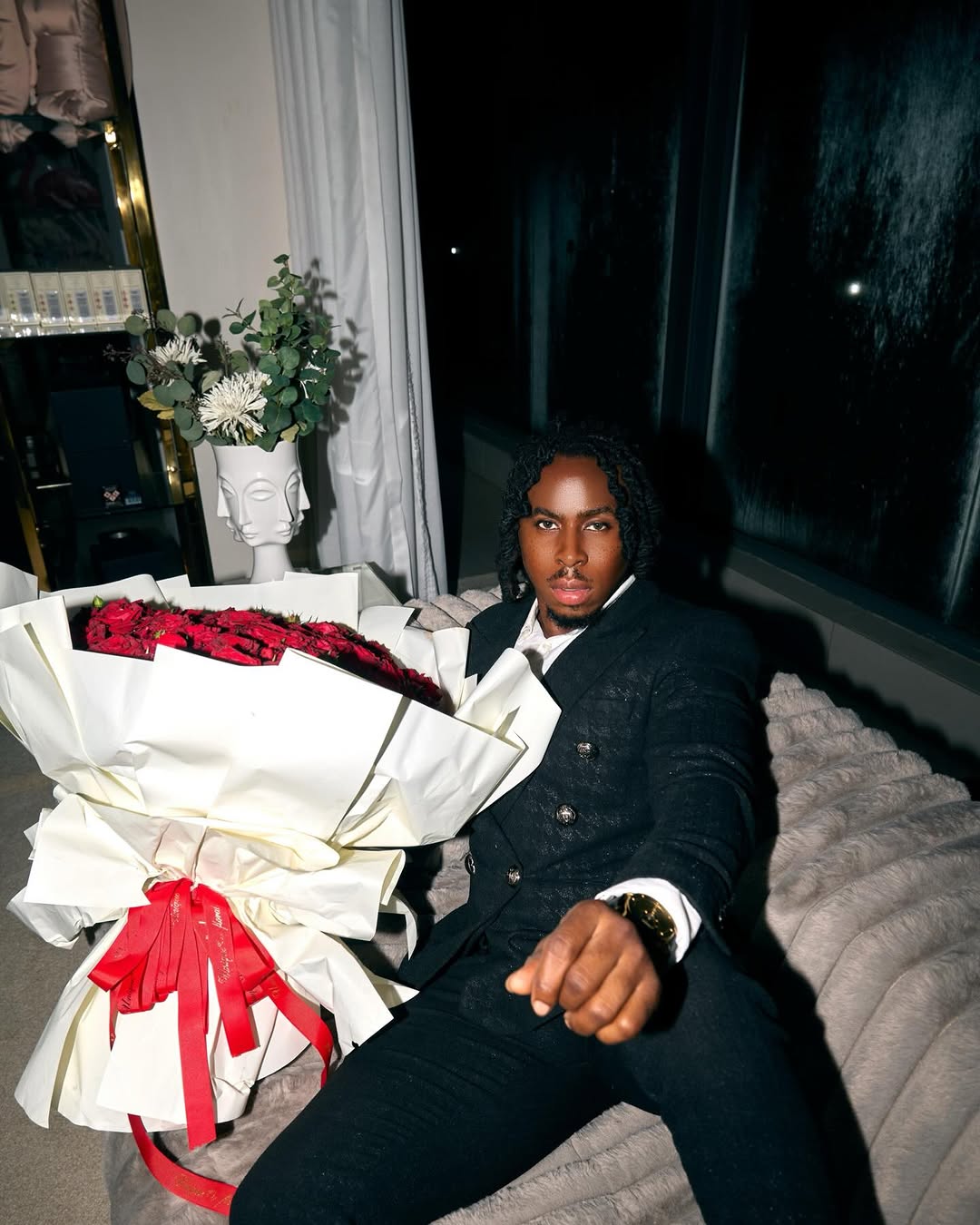
There is a title that precedes Kelvin Nana Yaw Anku wherever he goes: Style God. It is not a moniker born of ego, but of evidence; a title earned across years of work so distinctive, so culturally rooted, and so relentlessly excellent that Ghana’s fashion industry handed it to him and simply never took it back. Known to the world by his professional identity Kelvincent, this Accra-based creative director, fashion stylist, designer, and cultural strategist has become one of the continent’s most indispensable creative voices; a man whose hands have shaped the public images of some of West Africa’s biggest stars, and whose mind is busy engineering something even larger than fashion itself.
To understand Kelvincent is to understand that he has never approached his craft as a service industry. From the very beginning, styling was always a language; a way of communicating histories, honouring women, asserting the beauty of African identity, and insisting that the continent’s creatives deserve to occupy the highest rungs of global culture. That conviction has driven everything: from the clothes he selects, to the editorials he conceives, to the institutions he has founded.
Kelvincent’s ascent did not follow a conventional arc. He did not emerge from a European fashion school or debut on a Western runway. He built his reputation, deliberately and defiantly, from Accra; using Ghana as his canvas and its vibrant entertainment industry as his stage. His work was quickly distinguished by a rare quality: the ability to see what a person is, what they could be, and how to bridge those two realities through clothing and creative direction.


His client roster reads like a who’s who of Ghanaian entertainment; Joselyn Dumas, Efya, Berla Mundi, Becca, KiDi, Jackie Appiah, and Menaye Donkor, to name but a few. And for him, it has never been only about putting clothes, fabrics and accessories together, it’s also about a unique eye for detail, design, garment construction, and creative direction.
It was this depth that set him apart from the very beginning. Kelvincent was never a stylist who raided a showroom and assembled a look. He was a conceptualist; someone who arrived to every job with a point of view rooted in culture, history, and the specific identity of the woman in front of him. A two-time Glitz Style Award winner, it is staggering in the best possible way to see a man take over a sphere where women seemingly run and do it with such authority. To Kelvin, less is often the ultimate slay trick.
In 2020, a cultural moment arrived that announced Kelvincent to a global audience in the most emphatic way possible. During the viral #VogueChallenge; a social media movement where creatives worldwide designed imaginary Vogue covers; he created a stunning entry featuring a model in a striking red hijab, hat, and elaborate matching dress. The image was not simply beautiful; it was a statement.
The cover, according to the award-winning stylist himself, was inspired by Muslim women. “I want Muslim women especially to stand firm on what they want despite the misleading pictures of Arab women, extremism, Islamophobia and the popular stereotyping of women as weak and voiceless,” he wrote on Instagram.

British Vogue’s Editor Edward Enninful; one of fashion’s most celebrated figures selected Kelvincent’s cover as one of his ten best entries from across the entire global challenge. For a Ghanaian stylist working out of Accra, the validation was seismic. It confirmed what his community already knew: that Kelvincent was not a regional talent, but a world-class creative operating at the highest level of visual storytelling.
The most profound dimension of Kelvincent’s career is the work that lives at the intersection of styling and social purpose: his Women on the March project.
Launched on International Women’s Day, the initiative is intended to Motivate, Inspire and Empower women toward what he describes as their total liberation. The project was birthed from Kelvin’s personal experience of watching his biological mother go through perpetual abuse and eventually lose her life to it, as well as the positive impact of the three other women who raised him thereafter. It is a declaration that fashion can be activism; that clothes can carry causes, and that a photoshoot can be a protest.
The second volume featured three of Ghana’s most beloved public figures: Joselyn Dumas, Naa Ashorkor, and Nana Ama McBrown; all actresses, humanitarians, and prominent media personalities. The project prompted each woman to speak their truth, support other women, and share their stories so that others could find their voices.
A strategist by nature, Kelvincent has never been satisfied with only expressing his vision through other people’s platforms. He has built his own.

Anku Studio stylised as A N K U, with the positioning of “The New Africa”, is his fashion label and a direct expression of his design philosophy. The label has appeared in editorial shoots and music videos, championing the idea that African-designed garments can hold their own against any international house.
Even more expansive in its ambitions is Euphoria Africa; a foundation that celebrates African fashion, culture, and creativity by showcasing emerging designers, trendsetters, and cultural influencers. At a moment when African fashion is increasingly being co-opted and flattened by the Western fashion machine, Euphoria Africa exists to ensure the narrative is written by Africans, on African terms.
His self-description “Creative Director & Cultural Strategist. Creating culture, impact & economic systems across Africa” — is not hyperbole. It is a mission statement, and the evidence of its execution is everywhere.
At over 42,000 followers and growing, Kelvincent’s Instagram archive reads as something between an editorial portfolio and a manifesto. It offers a curated glimpse into the breadth of his world; but they also tease something larger. The portfolio of a man who is not simply executing projects but assembling the infrastructure of a new African creative economy.

Anku Studio continues to grow as a design house. Euphoria Africa continues to build its platform. And Kelvincent himself continues to collaborate with Ghana’s most prominent creative talent while expanding his role as a cultural strategist; a position that carries him well beyond the fitting room and into conversations about economics, representation, and the future of African identity on the world stage.
Ghana has produced extraordinary creatives. But what makes Kelvincent singular is the scale of his ambition; the refusal to think of fashion as merely commercial, the insistence that style is always also storytelling, advocacy, and architecture. He is not just dressing Ghana. He is dressing the idea of what Africa can be.
In a world that still too often looks past the continent for its creative references, Kelvin Nana Yaw Anku; the Style God, the creative director, the cultural strategist, the founder stands as one of the most compelling arguments that the future of global fashion has an Accra address.
And he has barely begun.
Follow Kelvincent on Instagram: @kelvincentgh · Euphoria Africa: @euphoria_africa · Anku Studio: @ankustudio