
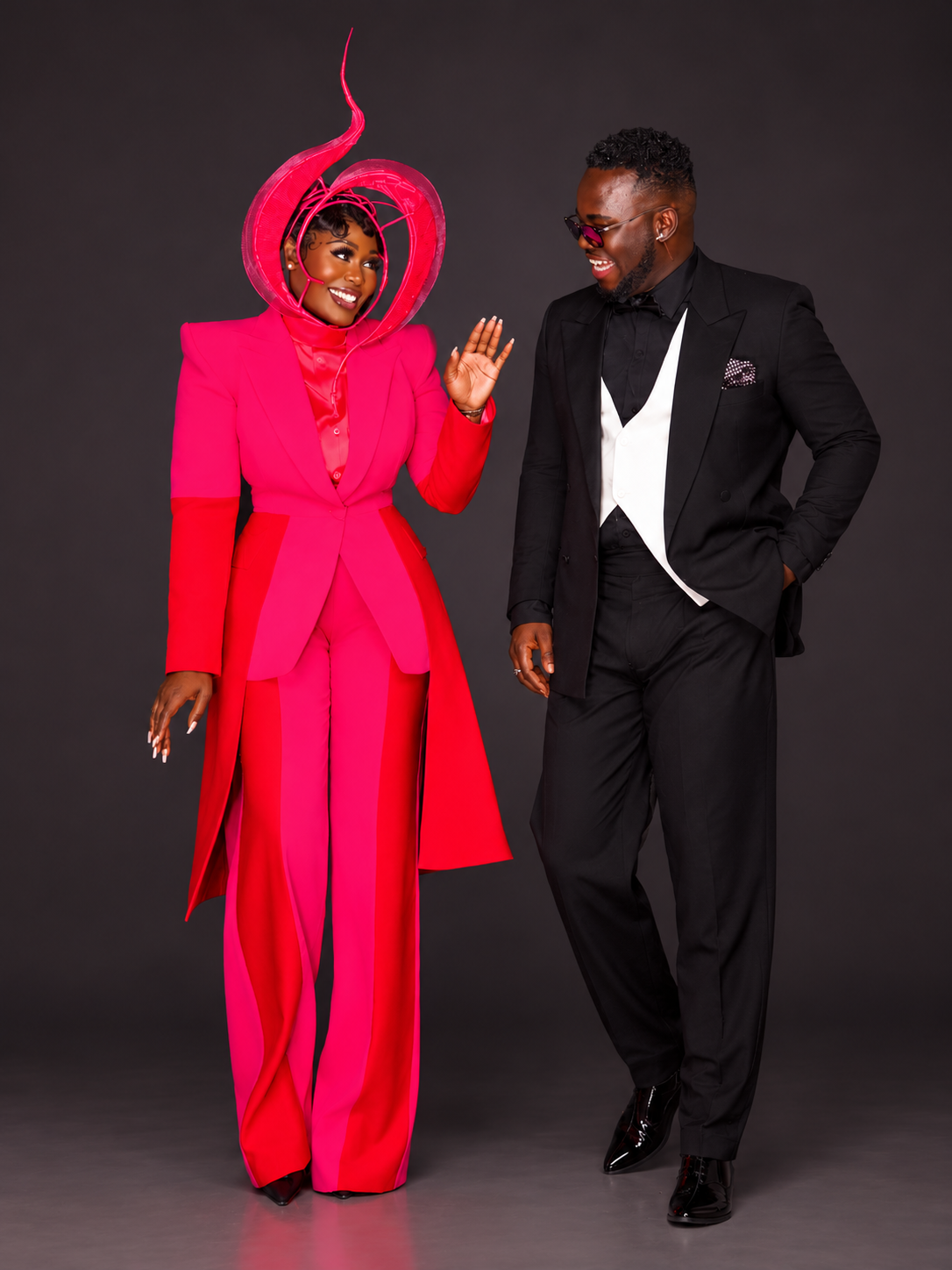
Behind every distinctive fashion identity is often a creative mind who understands the vision. For Nana Akua Addo, that creative force is Dapper Jayden, the artistic director whose eye for style has helped shape some of her most memorable fashion moments. But how did their story begin? From their first meeting to building a creative relationship rooted in style, trust and artistic expression, Dapper Jayden takes us behind the scenes of a partnership that continues to make fashion statements.
OT: Tell us about Dapper Jayden. Who were you before the fashion industry began to take notice of your work?
Dapper Jayden: Oh, well, well, well! Before the fashion industry began to take notice of my work, I was simply a vibrant young boy growing up in Achimota, a suburb of Accra, with a deep love for art, music, fashion, and entertainment. These were the things that naturally drew me in from a very young age. I was fascinated by creativity and the different ways people could express themselves.
I remember how my mum would call on me to help her put her looks together whenever she was getting ready for church. She would ask me what she should wear, and I would happily help her decide, assisting her in choosing and putting her outfits together. Looking back, I think those were some of my earliest experiences with styling, even before I understood that it could become a career.
I was also very particular about what I wore. I never really gravitated towards the ordinary; I always wanted to add a unique touch to my looks. Even as a child, I knew I had my own sense of style and a natural eye for detail. I might not have had the language or industry knowledge to explain it back then, but I knew I saw things differently.
In many ways, the Dapper Jayden you see today has always been there. The fashion industry may have amplified my voice and given my work a platform, but the passion, curiosity, and desire to be different were present long before the recognition came. I believe those early experiences laid the foundation for the creative entrepreneur, fashion curator, and image consultant I have become today.
OT: What early experiences, people or moments shaped your creative eye and made you realise you could build a career around your vision?
Dapper Jayden: I think growing up in an environment where creativity, media, and entertainment were always around me played a huge role in shaping my creative eye. I grew up in the same neighbourhood where Lynx Entertainment emerged, and I was also fortunate to have Dentaa Amoateng of the GUBA Awards as a close neighbour and family friend. I practically became her handbag at one point! I would follow her to hosting gigs, media meetings, and other engagements, and those experiences gave me an early glimpse into the world of entertainment.
I remember watching music video shoots and film productions happening right in my neighbourhood, including a film featuring Mercy Johnson and Majid Michel. I was always fascinated by everything that happened behind the scenes. Growing up, I also admired personalities like Tyra Banks, Edward Enninful, and Virgil Abloh, of blessed memory, who showed me how creativity could influence culture and shape global conversations.
Looking back, these experiences helped me realise that my passion was more than just an interest; it could become a career. They taught me to believe in my vision and understand that, with creativity, consistency, and self-belief, anything is possible.
OT: When you were starting out, what did success in the fashion industry look like to you, and how has that definition changed over the years?
Dapper Jayden: When I was starting out, success meant excelling in my chosen field, achieving my goals, and staying true to my vision, regardless of the naysayers. I believed in myself and kept going, even when people didn’t quite understand what I was trying to build, including members of my immediate family.
I was fortunate to have KKD, the legendary broadcaster and fashion icon, take me under his wing. He became a mentor and father figure who taught me that talent alone isn’t enough; you must understand your worth and, more importantly, get paid for your work! To this day, he’ll call before a gig to ask, “Have you received your down payment?” or check whether my pre-production or post-production is done. He’s tough on me, but I know it’s always from a place of love.
My journey has also been shaped by people I admired growing up, including my best friend, Sister Deborah, whose creativity and passion for the environment I deeply respect.
Today, success means much more than recognition or being seen in the right rooms. It’s about building something sustainable, knowing your worth, getting compensated fairly, creating meaningful opportunities, and leaving a legacy. Listen, the vision is beautiful, but the invoices must be paid too!
OT: We have seen you and Nana Akua Addo working together for quite some time now. How did you first meet, who initiated the first conversation, and what was the context of that interaction?
Dapper Jayden: My journey with Nana Akua Addo is such an interesting and beautiful story! I believe we first met about 10 to 12 years ago at an event. We randomly crossed paths in the lobby, and I remember thinking, “Wow, this is a woman I’ve admired for years!”
I had always admired her charisma, her passion for acting at the time, her love for fashion, and, most importantly, the way she carried herself and stood out in everything she did.
Around that period, Nana was beginning to bring a whole new level of razzmatazz to the red carpet. She was daring, different, and unapologetically herself, but not everyone understood her vision. She faced a lot of criticism and judgment, and I remember feeling that people needed to give her more credit for what she was trying to create.

So, I walked up to her, introduced myself, and told her how much I admired what she was doing. I encouraged her to believe in herself because I genuinely saw something special in her vision.
Fun fact: I actually have the eye for seeing greatness in people. In fact, I think I prophesied into her life that day! I told her that fashion held so much potential for her and that, if she stayed true to herself, she would excel and make a significant impact.
And honestly, look at her today! Seeing her work recognised by major fashion platforms around the world and witnessing the impact she has made, both in Ghana and internationally, is beautiful to watch.
I initiated that first conversation because Nana can be quite reserved in her own little bubble sometimes (Laughs). But once we started talking, we clicked almost instantly. What began as a simple conversation between two people who connected over fashion and creativity eventually grew into a beautiful friendship and working relationship.
OT: What was your first impression of Nana, both as a person and as a fashion personality? Did you immediately see the potential for a creative partnership?
Dapper Jayden: Honestly, one of the first things I recognised about Nana was that she was a very determined and courageous woman who wasn’t afraid to break barriers or experiment with fashion. I could see that she had a vision and wasn’t interested in playing it safe.
Funny enough, though, I didn’t expect us to start working together so quickly. I remember getting a phone call from her when she was preparing to attend an awards presentation and had some gifts to collect from Michelle Attoh’s office in Labone. She called me and said something along the lines of, “Hey, you need to come with me. Just come with me. I need you to be there!”
And that one phone call changed everything!
From that day, we started having deeper conversations about her brand, her image, and how she could position herself differently in the fashion space. Naturally, I began contributing ideas and helping her map out the direction she wanted to take, even before I fully realised how significant my role would become.
Eventually, she looked at me and said I had to be her artistic director. And just like that, the journey began! What started with one simple phone call gradually grew into a working relationship that has evolved over the years. Today, my role has grown beyond artistic direction into brand leadership, but we’ll get to that part of the story later.
What I remember most is how naturally everything happened. There was trust, there was vision, and there was a shared understanding of what we could build together as a team.
OT: What was the first project or look you worked on together, and what do you remember most about that experience?
Dapper Jayden: The 2016 Ghana Movie Awards! Nana Akua Addo’s look was one of the highlights of the night that year. It was our first iconic look together, and we nailed it!
I remember her making a majestic entrance at the event in a look that ensured all eyes were on her as she walked down the red carpet. We chose a black, sheer, figure-hugging number adorned with sequinned appliqués. The elegant, floor-grazing gown, with its full hem and long sleeves, was simultaneously sexy and edgy.

To complete the look, we added stunning matching heels and earrings, while her hair was styled to complement her subtle glam makeup.
If you ask me over and over again, I will always say Nana had one of the standout looks of the night, if not the best-dressed look of the evening!
OT: At what point did you realise that your relationship with Nana could grow beyond individual styling projects into something more significant?
Dapper Jayden: I think the turning point was when I realised Nana genuinely trusted my judgment and was willing to listen to my guidance beyond just fashion and styling. It became bigger than putting looks together; I was helping shape her artistic direction, her brand positioning, and even aspects of her personal growth. At some point, I became someone she could lean on as a life coach, and that connection continues to this day.
One thing I was particularly passionate about was encouraging her to embrace our Ghanaian fashion industry even more. At the time, she was working with incredible international designers from countries like the Philippines, Thailand, and India. I kept encouraging her to collaborate with our own talented designers because I believed Ghana had the creativity and craftsmanship to stand alongside the rest of the world.
I remember recommending designers like Yartel and Quophi Akotuah to her, and she began creating with local talents, too. Interestingly, some of these designers may not even know that I was the person who made the initial recommendation.
That was when I realised this relationship had real substance. We were building something beyond individual looks; I was contributing to her brand, creating opportunities for local designers, and helping shape a bigger fashion story for Ghana.
And when you recognise something with that much potential, you nurture it, protect it, and give it your best. For me, that was when I knew this was something worth holding on to.

OT: For those who may not fully understand the role, what does an Artistic Director do, and how is it different from being a stylist?
Dapper Jayden: I always say that styling is just one part of the bigger picture. A stylist may come in to put together a particular look for an event, a red carpet, or a photoshoot. But as an Artistic Director, your role goes far beyond what someone wears.
You are looking at the bigger vision. You are shaping the person’s image, defining their creative direction, influencing how they are perceived, and ensuring that everything they put out communicates a clear and consistent story. From the designers they work with to the brands they associate with, the projects they take on, and the image they project to the world, you are thinking about how all these elements come together to build a strong identity.
With Nana, for instance, it was never just about getting her dressed. It was about understanding who she was, recognising her potential, and helping her position herself in a way that would make her stand out, not just in Ghana but internationally. It also meant encouraging her to collaborate with our local designers and giving Ghanaian fashion a stronger presence through her platform.
So, for me, an Artistic Director is a visionary, a strategist, and a creative partner. You are not just asking, “What are we wearing?” You are asking, “What are we building? What do we want people to see? And what legacy are we creating?”
That, to me, is the real difference between being a stylist and being an Artistic Director. One focuses on creating the look; the other helps shape the bigger picture behind the look. And when you can do both effectively, that is where the real magic happens.
OT: What do you think Nana saw in you that made her trust you with the responsibility of shaping her wider fashion identity?
Dapper Jayden: I think Nana saw my attention to detail, my ability to think outside the box and, most importantly, my willingness to explore the unusual. I’ve never really been someone who believes in doing things simply because that’s how they’ve always been done. I like to challenge the norm, push creative boundaries and look at things from perspectives that people may not immediately consider.
Beyond the creativity, I think she recognised that I genuinely understood her. I wasn’t just looking at what she could wear; I was looking at who she was, what she represented and how we could translate that into a powerful fashion identity that people could recognise anywhere in the world.
And honestly, the relationship has always been a two-way street. I love working with someone who stimulates my mind, challenges my creativity and isn’t afraid to explore new possibilities. Nana has that quality. She brings ideas and possibilities that intrigue me, while I bring a certain perspective that challenges her to think differently. That creative exchange is what makes our partnership so exciting.
I think trust is built when someone realises that you’re not just there to execute a brief, but that you genuinely care about the bigger picture. With Nana, I’ve always wanted us to think beyond the next red carpet or the next outfit. I’ve wanted us to build an identity, tell a story and create something that stands the test of time.
And perhaps that’s what she saw in me: someone who could see beyond the clothes, recognise the possibilities and help turn a vision into something tangible, distinctive and impactful.
OT: Nana has developed a recognisable presence on the red carpet. How do you keep each appearance fresh and unexpected while remaining true to her identity?
Dapper Jayden: I think the secret is understanding that while Nana has a recognisable identity, that identity should never become a limitation. For me, the goal is not to repeat what has worked in the past, but to keep evolving while preserving the essence of who she is.
With Nana, we are always asking ourselves, “What can we do differently this time? How can we surprise people? How can we make this appearance memorable?” Sometimes, that means experimenting with silhouettes, exploring unconventional designers, playing with textures or embracing a look that people may not immediately understand. Fashion should provoke conversation, and I believe Nana has mastered the art of making people look twice.

But there’s also a lot of thought behind the drama. Every appearance has to communicate something. We consider the event, the audience, the story we want to tell and the statement we want to make. It’s never just about wearing something extravagant for the sake of attention. There has to be an idea behind it.
I also think one of Nana’s greatest strengths is her courage. She’s willing to take risks, and as a creative, that gives me room to push boundaries. My job is to keep challenging her creatively while ensuring that what we create still feels authentic to her.
Ultimately, you want people to see Nana and recognise her signature, but you also want them to wonder what she’ll do next. Consistency builds an identity, but evolution keeps people interested. And for me, that’s the sweet spot: remaining unmistakably Nana Akua Addo while never allowing the world to predict her next move. That’s where the magic of fashion lies.
OT: What does preparing for a major red carpet or international fashion event look like behind the scenes, and how do you handle last minute changes or unexpected challenges?
Dapper Jayden: Honestly, what people see on the red carpet is often just the final five to ten minutes of weeks, months or even years of thought, planning, conversations and creative decisions. There’s a whole world behind that one moment. For me, preparation starts with understanding the event, the narrative we want to communicate and the kind of impression we want to leave. We think about the designers, the silhouette, the accessories, the overall styling and how everything comes together to tell one cohesive story. Sometimes, it also involves reaching out to designers internationally, sourcing statement pieces, coordinating fittings and managing logistics. When you’re working across different countries and time zones, trust me, it can be a lot.
But beyond the clothes, I pay attention to the smallest details because those details can make or break a look. I like to think several steps ahead. What if an outfit doesn’t arrive on time? What if a fitting doesn’t go as planned? What if we need to change direction at the last minute? You have to anticipate possibilities and always have a Plan B.
And yes, last-minute changes happen! In fashion, especially when you’re working on major red carpets and international events, you have to be flexible. Sometimes, you have to think on your feet, improvise and make decisions under pressure without compromising the vision. I believe experience teaches you to remain calm, trust your creative instincts and focus on finding solutions rather than panicking.
Working with Nana also requires a certain level of courage and openness because we love to push boundaries. Sometimes, the final direction evolves as we work, and you have to be willing to embrace that process.
Ultimately, the red carpet may be about glamour, but behind the glamour are discipline, teamwork, strategy and a lot of problem-solving. My job is to make sure that, regardless of what happens behind the scenes, when Nana steps out, the world sees the vision, not the stress it took to bring it to life.
OT: Let’s talk about the AMVCA 2026. Walk us through the creative process behind Nana’s three looks. Why did you decide on three distinct looks, and what story were you hoping to tell through each of them?
Dapper Jayden: For us, the AMVCA is about more than just fashion; it’s about storytelling, identity and making a statement. With Nana, fashion is never just about putting on a beautiful outfit. It’s about creating a moment, communicating a message and leaving a lasting impression.

Look 1
The decision to create three distinct looks came from the understanding that each appearance presented an opportunity to tell a different story while remaining true to who Nana is as a fashion icon. We wanted each look to have its own identity, energy and purpose, rather than simply giving people three variations of the same thing.
Each look represented a different dimension of her style and personality. We explored different expressions of creativity, craftsmanship, culture and boldness while ensuring that the overall narrative remained cohesive. From the silhouette and construction to the textures, details and overall presentation, every element had to contribute to the story we wanted to tell.


For me, one of the most important things about working with Nana is understanding that she has built a very distinctive fashion identity. So, the challenge is not simply to make her look beautiful; it’s to keep evolving that identity, pushing boundaries and finding new ways to surprise people without losing the essence of who she is.
Ultimately, the three looks were about versatility and creative range. We wanted to demonstrate that fashion can tell multiple stories through one individual and that you can reinvent your presentation without reinventing yourself. With Nana, the goal is always to create something memorable, something that sparks conversation and something that people will still be talking about long after the red carpet is over.
OT: If Nana were to attend the Met Gala, what story would you want her look to tell about Ghana and Africa? How would you translate that cultural identity into a concept that resonates with a global audience?
Dapper Jayden: If Nana were to attend the Met Gala, I would want us to tell a story that represents Ghana and Africa in a powerful and bold way. But, of course, the Met Gala always has a theme, so the first step would be to understand that year’s theme and find a creative way to merge it with our cultural identity. For me, it’s about finding the right balance between respecting the brief, being creative and staying true to who we are as Africans.
I would want us to draw inspiration from our heritage, history, craftsmanship, textiles and the things that make Ghana and Africa unique. But how do we take all these elements and interpret them in a way that feels fresh, contemporary and speaks to a global audience? That’s where the creativity comes in. It’s not just about putting Nana in a beautiful outfit; it’s about creating something meaningful, something that makes people stop, look and want to understand the story behind it.
And, you know, storytelling is always a very important part of our creative process. I always want there to be a reason behind what we do. Why this fabric? Why this silhouette? Why these details? What are we trying to communicate? I want every element to have a purpose while ensuring that the final look aligns with that year’s theme.
I would also want to ensure that we give our African designers and artisans the opportunity to showcase their creativity and craftsmanship on that global platform. We have so much richness in our culture, and I believe we can translate that into fashion that competes at the highest international level.
Ideally, I would want Nana’s look to be more than just a red-carpet moment. I would want it to spark conversations, tell a meaningful story and make people curious about Ghana and Africa. For me, that is the beauty of fashion. You’re not just dressing someone; you’re communicating an idea, creating an experience and leaving a lasting impression.
OT: What has been the most difficult lesson you have learnt about working in the fashion industry, particularly when managing expectations, public scrutiny and creative pressure?
Dapper Jayden: I think one of the most difficult lessons I have learnt in this industry is that talent alone is not always enough. Sometimes, it comes down to relationships, perception and the circles people choose to work within. You realise that the industry can be quite cliquish, with people sticking to a particular set of creatives or only wanting to work with certain people. Sometimes, that can limit opportunities for other talented individuals who also have something valuable to bring to the table.
Another thing I have learnt is that creative work requires trust. As an artistic director or brand lead, you can have a very clear vision for a brand or an individual, but not every client is willing to give you the creative freedom to execute that vision. Sometimes, people bring you on board because of your expertise, but when it is time to make creative decisions, they want to control every single detail. That can be challenging because you are responsible for the final outcome, yet you may not necessarily have the freedom to make the decisions you believe will deliver the best results.
That is one thing I really appreciate about working with Nana. She understands my role and trusts me to do what I do. Of course, we have conversations, exchange ideas and challenge each other creatively, but she gives me the room to explore, think outside the box and bring my own perspective to the table. She understands that when you bring an artistic director or a brand lead on board, you have to allow that person to bring their expertise into the process. That trust makes a huge difference.
I have also learnt that when you put your work out there, especially when you are working with someone as visible as Nana, public scrutiny is part of the package. People will have opinions, people will criticise, and not everybody will understand the thought process behind a particular decision. You have to develop a thick skin without becoming defensive, and you have to learn to separate constructive criticism from noise.

Nevertheless, the biggest lesson for me has been to remain true to my creative vision, continue to learn and understand that you cannot always please everybody. You have to know your value, build relationships with people who respect your expertise and be confident enough to stand by your work. At the same time, you must remain humble enough to grow.
For me, the fashion industry is not just about the clothes; it is also about people, trust, collaboration and the ability to stand firm in your craft, even when the pressure is on.
OT: How do you measure your growth as an Artistic Director? Is it through recognition, the quality of your work, the opportunities you create for other creatives or something else?
Dapper Jayden: For me, as Dapper Jayden, growth as an Artistic Director goes beyond recognition or the number of times my work makes headlines. Of course, recognition is beautiful, and I appreciate every opportunity that allows people to see what I bring to the table. But I believe the real measure of growth lies in the impact of your work, the quality of your ideas and how much you evolve creatively over time without feeling stagnant or getting stuck.
I look at where I started, the things I have learnt, the numerous brands and people I have worked with, and how far I have been able to push my creative boundaries. Am I telling better stories? Am I becoming more intentional with my decisions? Am I creating work that communicates something beyond aesthetics? Those are the questions I ask myself.
Another very important measure for me is the opportunities I create for other creatives. I don’t believe creativity should be a one-man show. When I come into a project, I want to be able to identify talent, bring people together, create opportunities and give other creatives the room to showcase what they can do. If I am growing but the people around me are not growing with me, then I think there is still more work to be done.
Working with someone like Nana Akua Addo has also taught me a lot about the importance of trust, consistency and evolution. When you are responsible for shaping someone’s visual identity, you have to keep challenging yourself. You cannot afford to become complacent or repeat the same ideas simply because they worked before. Every project presents an opportunity to learn something new and push the vision further.
And, of course, there is the business side of it. Growth also means being able to build sustainable creative relationships, attract bigger opportunities and position yourself in rooms where your ideas can make a difference. I measure my growth by the body of work I am building, the stories I am able to tell, the people I inspire and the doors I help open for others. Recognition may introduce you to the world, but your work, integrity and impact are what sustain you.
I am still learning, still evolving and still pushing. For me, growth is not about arriving at a point where you believe you know everything. It is about remaining hungry enough to become better at what you do while never forgetting why you started in the first place.
That, for me, is the Dapper Jayden journey.
OT: What has working with Nana taught you about yourself, your abilities and the kind of creative professional you want to become?
Dapper Jayden: Working with Nana Akua Addo has taught me the importance of trust, patience and constantly evolving creatively. It has challenged me to think bigger, pay attention to the finer details and understand that my role goes beyond putting looks together; it is about building a brand, telling stories and creating lasting impressions.

It has also strengthened my confidence in my abilities as an Artistic Director and Brand Lead. Personally, I have grown into a creative professional who is not only recognised for his work but also for his impact, integrity and the opportunities he creates for others. For me, growth is about becoming better at what I do while remaining true to who I am.
OT: What would the version of you who was just starting out in fashion find most surprising about your life and career today?
Dapper Jayden: By far, my favourite question! (Laughs). Honestly, the younger Dapper Jayden would probably be shocked that the boy who was once so fascinated by fashion would grow up to help shape the image of some of the people he once admired.
I think he would be surprised by the rooms I get to walk into, the conversations I get to be part of and the responsibility that comes with being an Artistic Director and Brand Lead. He would also learn very quickly that fashion is not just about looking good; there is business, strategy, pressure and plenty of drama behind the scenes!
But I think what would make him proudest is that, through it all, I haven’t lost my hunger, drive or eagerness to keep going. The vision is bigger, the lessons are deeper and the dreams? Oh, they are still very much alive!
OT: What advice would you give a young creative who has the talent and vision but is still waiting for someone to recognise their potential?
Dapper Jayden: My advice is simple: stop waiting for permission to become who you know you can be. Sometimes, the very people you are waiting to recognise your potential may never see it until you start putting yourself out there.
Use what you have, start where you are and make the most of every opportunity, no matter how small. Build your portfolio using the platforms available to you today, tell your story, network strategically and let your work speak for you. You may not have the biggest connections or the resources you desire, but you can start with what is already in your hands.

And please, don’t let the fear of being overlooked stop you from showing up. I know what it means to keep pushing, even when the recognition doesn’t come immediately.
Your talent may open the door, but your consistency, character and ability to evolve will keep you in the room. Keep creating. Your moment may come from a place you least expect.
OT: Finally, when people look back on Nana Akua Addo’s fashion legacy years from now, what do you hope they will understand about your contribution to it?
Dapper Jayden: I hope that years from now, people will look back and recognise that Dapper Jayden was a great fashion curator, Brand Lead and Artistic Director who played a meaningful role in shaping Nana Akua Addo’s fashion identity and legacy. Beyond the iconic looks, I want them to understand the vision, strategy, creativity and intentional storytelling that went into building her brand.
I want my contribution to be remembered as more than just creating beautiful fashion moments. It was about understanding the woman, refining her image, pushing creative boundaries and ensuring that every appearance had a purpose. I hope people will recognise that I brought my expertise and perspective to the table and helped shape a visual identity that people could recognise, discuss and remember for years to come.
To end, we must also remember that behind every memorable fashion moment, there is a team, a vision and someone making sure the magic comes together. I would be proud to know that I played my part in building a legacy that continues to inspire long after the cameras stop flashing.