
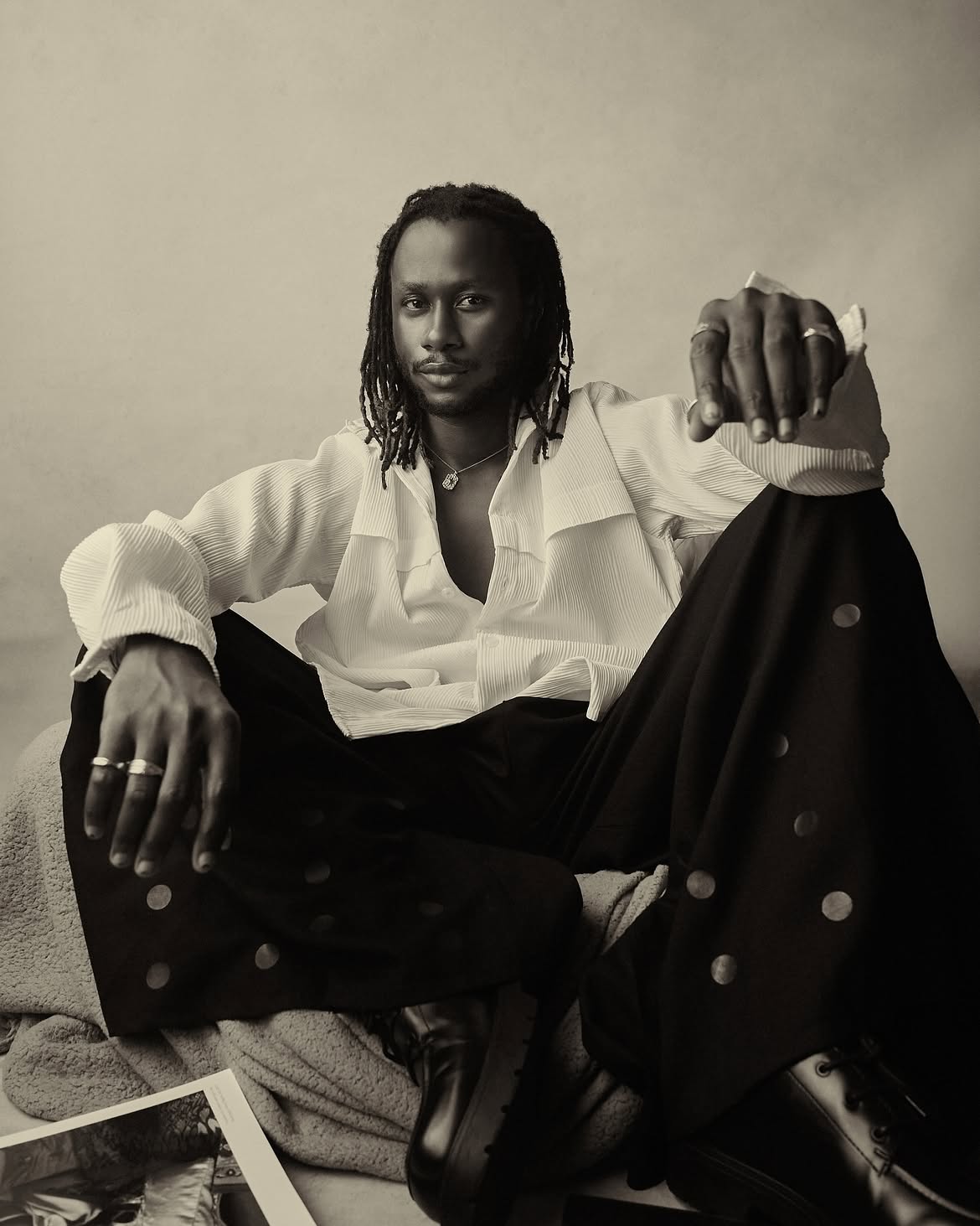
There is a kind of influence that does not always announce itself loudly. It is found in the stories that reach international audiences, the creatives who receive recognition beyond their immediate circles, and the images and ideas that change how a culture is perceived. For Ghanaian writer, editor and creative producer Richmond Ekow Barnes, this is where much of the work happens.
Known professionally as Ekow Barnes, he has built a career at the intersection of fashion journalism, cultural storytelling, creative strategy and production. His work spans international editorial platforms, global brand campaigns and initiatives designed to give African talent greater visibility. In an industry where the people behind the stories can sometimes remain in the background, Barnes deserves recognition not only for what he has accomplished, but also for the creative possibilities he continues to help open up.
African creatives do not have to choose between telling stories rooted in their environments and participating in conversations that shape global culture. They can do both, and Barnes has made that intersection central to his work.
International publications
Barnes’s professional journey reflects a combination of communications expertise, editorial instinct and a sustained interest in fashion as a form of cultural expression.
After studying communications and public relations at BlueCrest University in Accra, he developed experience across communications, fashion consulting, writing and creative production. His early professional experience included an internship at Strategic Communications Africa, before he expanded his work across fashion and editorial projects.
Over time, his writing has appeared across a remarkable range of international publications, including Vogue Italia, Vogue Business, Dazed, i-D, GQ South Africa, The Guardian, Essence, Glamour, Ebony and CNN. His portfolio also includes work associated with The Wall Street Journal and other established media platforms.

These are not simply impressive names to place in a biography. They represent editorial spaces with different audiences, sensibilities and standards, and they demonstrate the range of conversations into which Barnes has brought his perspective.
For a Ghanaian creative, contributing to international publications means participating in the documentation of fashion and culture on a much wider stage. It creates opportunities for stories, designers, artists and cultural movements to travel beyond their immediate audiences.
And importantly, Barnes has not confined his work to the conventional language of fashion coverage. His writing explores the relationships between identity, sustainability, history, economics, community and creative expression. That breadth is central to what makes his contribution worth celebrating.
A storyteller documenting Africa as it is
Fashion can be a conversation about clothing, but it can also be a conversation about who we are, where we come from and what we want the world to understand about us.
Some of Barnes’s most compelling work lies in his ability to approach African creativity through that wider lens. Rather than treating fashion as an isolated industry, he places it within the social and cultural realities that give it meaning.
His published work for Guzangs, where he serves as an editor, offers particularly strong examples.
In At OWO 25, Accra Emerges as the New Capital of Conscious Style, published in November 2025, Barnes examined the Obroni Wawu October festival and the creative energy surrounding secondhand clothing, upcycling and sustainable fashion in Accra. The story highlighted how designers, tailors, stylists and thrifters are transforming discarded garments into opportunities for expression and innovation.
The significance of this kind of coverage extends beyond the event itself. It places Ghanaian fashion conversations within the global discussion about sustainability, consumption and the future of the fashion industry.

His reporting has also explored African designers working with recycled materials, the development of Zimbabwe’s fashion scene, the cultural significance of everyday street style and the relationship between heritage and contemporary luxury.
These stories matter because Africa’s creative industries deserve to be understood in their full complexity. There is innovation in the studios, ingenuity in the markets, experimentation on the streets and cultural knowledge embedded in traditional techniques. Each offers a different perspective on what African creativity can be.
Barnes’s work helps connect those worlds, presenting them as part of a larger creative landscape rather than as isolated curiosities.
And that is a meaningful contribution: documenting African culture with enough context to show not just what is happening, but why it matters.
Giving emerging creatives the visibility they deserve
One of the most important aspects of Barnes’s career is his interest in the people behind the work.
His professional biography identifies supporting emerging talent and bringing their work to wider audiences as central to his approach. That commitment is reflected in both his editorial work and his involvement in creative production.
In African fashion, talent has never been the only question. Access to platforms, meaningful industry relationships, international exposure and opportunities to work with established brands can all influence how far a creative career travels.
A designer may have a compelling vision but lack access to the publications that can introduce their work to new audiences. A photographer may have an extraordinary visual language but need the right collaborators to bring a larger project to life. A stylist, model or art director may be doing important work without receiving the recognition that makes future opportunities possible.

This is where the relationship between journalism and creative production becomes particularly significant.
A well-reported article can give an emerging creative a public record of their work. An editorial can introduce their ideas to readers who might never have encountered them. A well-conceived campaign can bring together talent whose combined contribution creates something greater than any single individual could produce alone.
Barnes operates across these interconnected spaces. His work gives him opportunities not only to tell stories about creative people, but also to participate in the processes through which those stories are made.
That is a contribution worth recognising. Because celebrating African creativity is not only about applauding the finished product. It is also about building the visibility and connections that allow the people behind it to continue creating.
Global creative campaigns
In 2022, he co-founded WB Group, also known as Will and Barnes Group, a creative production and talent management company based in Accra. The organisation was established to support creatives and develop stories and audiovisual projects with international reach. Barnes serves as its Chief Creative Officer.
One notable project associated with the group was the campaign for the launch of New Balance’s Sadio Mané football boots around the 2022 Africa Cup of Nations. The project brought global sportswear branding into conversation with African football and creative production.
Barnes has also been associated with creative projects for major brands including Puma, Mercedes-Benz, Emirates, Burberry, Spotify, Qatar Airways and Adidas, alongside editorial and media organisations.
What makes this side of his career particularly noteworthy is the range of skills involved.
Creative production requires more than an interesting idea. It calls for a clear vision, an understanding of the audience, the ability to coordinate people and resources, and the judgment to ensure that the final work communicates what it set out to say.
When that process involves international brands and African creative teams, it can also create opportunities for local talent to participate in projects with broader reach.
Barnes’s experience across editorial work, public relations, brand strategy and production places him at the intersection of these different demands. He understands the importance of the story, but he also works within the structures that bring a story to life.
It is one thing to describe the potential of African creativity. It is another to help develop the projects through which that potential becomes visible.
A voice for a more nuanced African fashion narrative
For decades, African fashion has had to contend with narratives that too often reduce the continent’s creative industries to a handful of familiar references. Yet the reality is far more expansive: different countries, histories, aesthetics, communities, materials and approaches to contemporary design exist alongside one another.
Barnes’s editorial interests reflect that wider landscape.

His published work has considered fashion through sustainability, the economics of creative industries, cultural identity and the relationship between African communities and the global fashion system. His coverage of streetwear, independent designers and contemporary art also reflects an understanding that culture is created in many places, not only in established luxury houses or major fashion capitals.
That perspective is especially important at a time when African designers and cultural practitioners are increasingly participating in international conversations while continuing to build industries and audiences at home.
The work of documenting these developments requires curiosity, cultural awareness and a willingness to look beyond the obvious names. It also requires recognising that African fashion is not a single aesthetic or a single story.
Barnes’s contribution lies in helping tell those stories with greater range, bringing attention to people and ideas that deserve to be part of the conversation.
His career also demonstrates the value of creative professionals who can move between local knowledge and international platforms without losing sight of the people and communities at the heart of their work.
The importance of building from Accra
There is something particularly significant about building an internationally connected creative career while maintaining professional roots in Accra.
Global recognition is often associated with relocating to established creative capitals. Yet Barnes’s work through WB Group demonstrates how an Accra-based creative enterprise can engage international brands, develop audiovisual projects and contribute to wider conversations about African culture.
This does not mean that operating from Accra comes without challenges, nor does one person’s career resolve the structural barriers facing the wider industry. Rather, it demonstrates that location does not have to define the limits of a creative person’s ambition.
Accra is home to designers, photographers, stylists, writers, filmmakers, models and entrepreneurs whose work merits engagement far beyond the city. The more opportunities there are to connect those creatives with international audiences and collaborators, the more possibilities emerge for the wider industry.
Professionals who understand both the local environment and the expectations of international partners can help create those connections.
Barnes’s career places him among the Ghanaian creatives working across those boundaries, bringing together editorial storytelling, brand collaboration and the development of creative talent.
For a new generation of African creatives, that is an encouraging example of how different disciplines can reinforce one another.
Giving Ekow Barnes his flowers
Recognition is often reserved for the person standing in front of the camera, the designer whose collection closes a show or the artist whose work occupies the gallery wall. The people who help shape the story around that work do not always receive the same attention.
Richmond Ekow Barnes deserves to be recognised as one of those people whose contribution reaches across multiple parts of the creative industry.
He has built an international editorial portfolio. He has worked with globally recognised brands. He has helped develop creative campaigns and production projects. Through his work at Guzangs and his leadership at WB Group, he continues to engage with the people, ideas and cultural movements shaping contemporary African creativity.
None of these achievements needs exaggeration to be impressive.

What stands out is the combination: a Ghanaian creative who understands the written word, the visual image, the demands of brand communication and the importance of giving talent a platform. Someone whose professional work moves between documenting culture and helping produce it.
And while accolades and publication credits are useful measures of professional reach, the broader value of such work also lies in the stories preserved, the perspectives introduced and the creative people given an opportunity to be seen.
For Ghana’s fashion and cultural industries, having people who can document their evolution while actively participating in their development is valuable. It helps build a richer record of what is happening now and creates reference points for the people who will shape what comes next.
Barnes’s journey is still unfolding, and there is more to look forward to from a creative career that has already crossed editorial, cultural and commercial boundaries.
For now, however, the achievement deserves its own moment of recognition.
For Richmond Ekow Barnes, telling the story, shaping the image and creating the opportunity can be powerful forms of contribution in their own right. His work helps bring African creativity into wider view, and his commitment to storytelling makes him a Ghanaian creative worth celebrating.
Here is to the writer behind the stories, the creative producer behind the productions and the advocate for talent whose work deserves to travel further.
Ekow Barnes, your work deserves to be seen, your contribution deserves to be acknowledged, and your flowers are well earned.