
What Is a Riad?
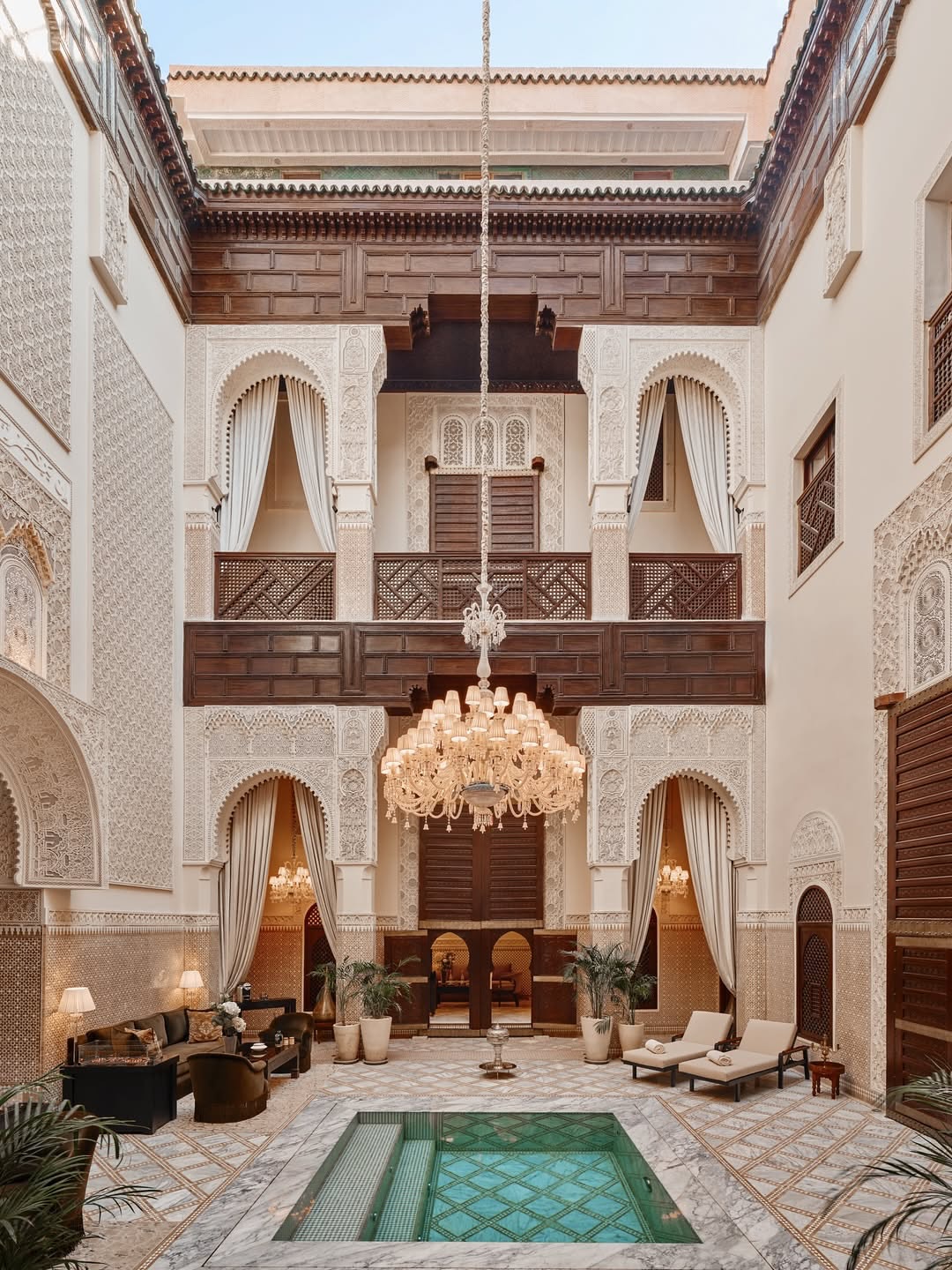
A riad is a traditional Moroccan house or palace built around an interior courtyard garden, typically featuring a central fountain and surrounded by rooms that open directly onto the courtyard. The design prioritizes privacy, natural ventilation, and a serene indoor oasis. The word itself comes from the Arabic “ryad,” meaning “garden”; a nod to its symbolic roots in Islamic architecture as a representation of paradise.
Riad décor is a tapestry of cultural influences; Islamic, Berber, and Andalusian aesthetics woven together. Every element is thoughtfully curated, from vivid colors and sumptuous textiles to intricate patterns that adorn walls and furnishings. Elaborate tilework known as zellige lines surfaces with geometric precision, while ornate plasterwork and carved wooden details add layers of texture and depth.
The Design Principles Travelling the World
1. The Inward-Facing Courtyard

The riad’s most copied idea is its central courtyard. Rather than looking outward, the home turns inward; creating a private world within. This courtyard acts as a natural air conditioning system: it draws hot air upward through convection, water features cool the air through evaporation, thick walls absorb heat during the day and release it at night, and strategic window placement creates cross-ventilation. Global architects, especially those designing luxury homes in hot climates across the Middle East, Asia, and now Africa, are borrowing this passive cooling principle.
2. Zellige Tilework Goes Global

Zellige (intricate mosaic tilework) is made from hand-cut terra cotta pieces glazed in traditional colors. Each color carries meaning; white for wisdom, green for nature and Islam, blue for the sky and infinity. The geometric patterns follow complex mathematical principles rooted in Islamic philosophy. Today, zellige-inspired tiles appear in hotel lobbies in London, bathrooms in São Paulo, and kitchen backsplashes in New York.
3. Tadelakt – The World’s Newest Luxury Finish


Tadelakt is a plastering technique that creates incredibly smooth, marble-like surfaces made from lime plaster, polished with stone, and sealed with soap. It is completely waterproof and develops a beautiful patina over time. What was once a Moroccan bathroom secret is now featured in high-end spas and boutique hotels across Europe, the US, and increasingly across Africa.
4. Privacy Meets Openness

Riad design creates two distinct zones; public areas for receiving guests on the ground floor, and private family spaces on upper floors; with transition spaces like courtyards and corridors acting as buffers. Interior designers globally are applying this zoning philosophy to open-plan homes, creating spaces that feel both communal and intimate.
Morocco’s Design Influence Is Being Officially Recognized
The inaugural Moroccan Interior Design Awards (MIDAs) in December 2025 signaled a fundamental shift in how Morocco views its built environment. Backed by the Ministry of National Territorial Planning, the awards brought Morocco’s creative design industry into the global spotlight; a sector that for years operated in the shadows of architecture and construction.
Today, hotel lobbies are integrating traditional zellij tilework with cutting-edge smart home technology, while restaurants evoke centuries-old riad courtyards in thoroughly modern settings.

Africa has its own wealth of courtyard-based architectural traditions; from the compound homes of West Africa to the Swahili stone towns of the East African coast. The global rise of riad aesthetics is a reminder that African spatial intelligence has always been world-class. The courtyard. The thick wall. The inward sanctuary. The handcrafted surface. These are African ideas.
With its peaceful courtyards, intricate details, and sense of privacy, the riad has become a symbol of Moroccan elegance now being reimagined to suit contemporary lifestyles around the world. The question for African designers and homeowners is: how do we lead that reimagining, rather than just watch it happen from the outside?