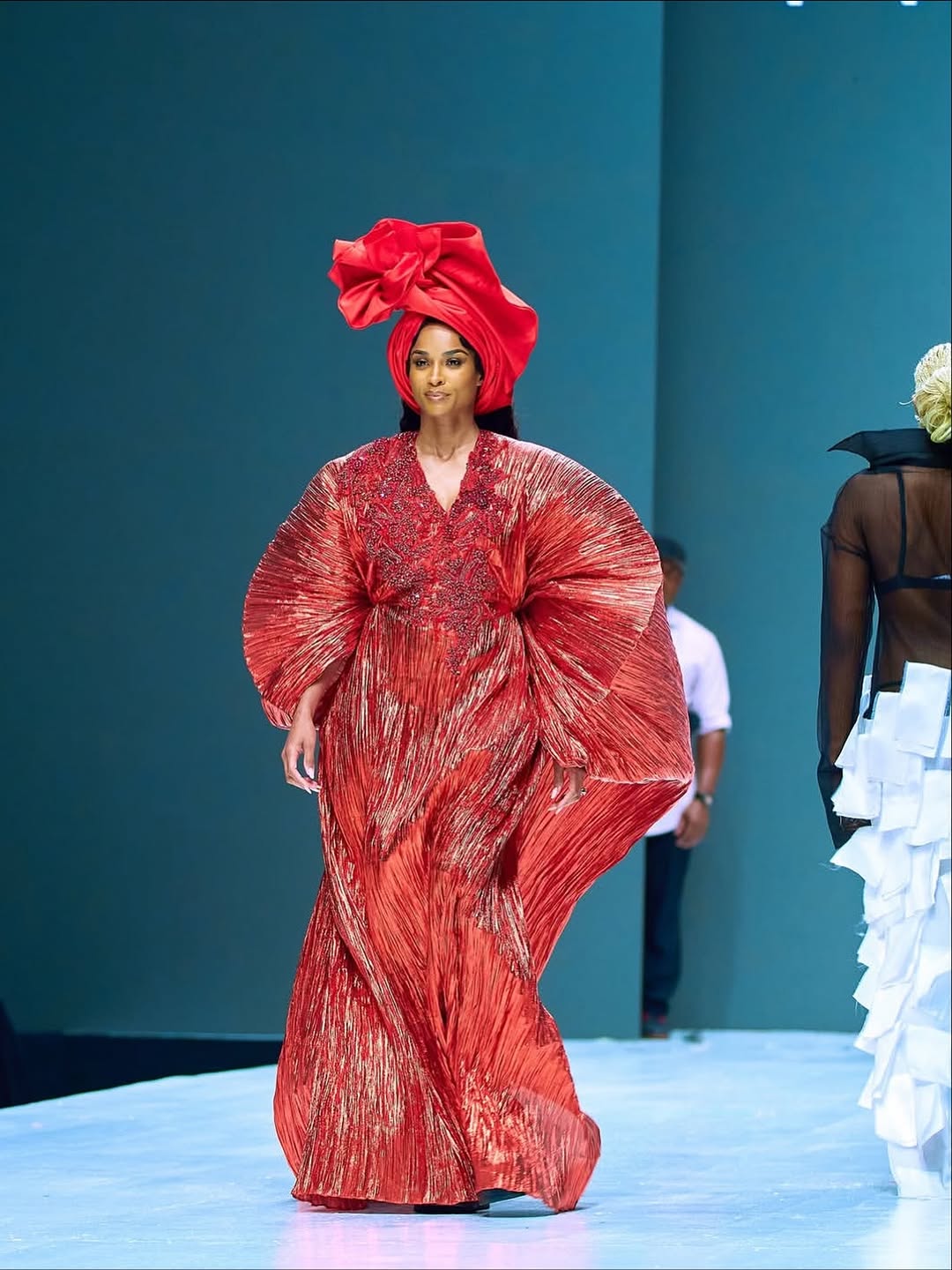
Lagos Fashion Week (LFW) 2025 solidified its standing as Africa’s largest and most influential clothing trade show, operating under the highly symbolic theme of “In Full Bloom”. This 15th-anniversary celebration marked a critical juncture, moving beyond showcasing nascent talent to confirming the Nigerian fashion industry’s arrival as a commercially viable, world-class luxury market. The atmosphere during the October to November run was described as an electric fusion of culture, commerce, and pure artistic ambition, positioning Lagos as a global hub for creativity.
While the runways themselves provided the foundation, the surrounding areas, particularly the Federal Palace Hotel grounds, transformed into a secondary, vibrant fashion carnival. Attendees leveraged the LFW platform to execute daring, personalized style statements, expertly blending elegance with edge. The street style documented for 2025 was dominated by bold choices: bright color palettes, including fiery reds, lush greens, and vivid oranges, dominated the coastal backdrop. Crucially, the style narrative centered on reimagining heritage, with Adire and Ankara prints appearing in novel applications, like wide-leg trousers and corset tops, proving that traditional fabrics remain foundational to Nigeria’s evolving fashion identity. Silhouettes were intentionally audacious, defined by juxtaposition: oversized shirts paired with sharp tailoring, and structured pieces balanced by soft, dramatic drapes.

Outfit: @dejiandkola
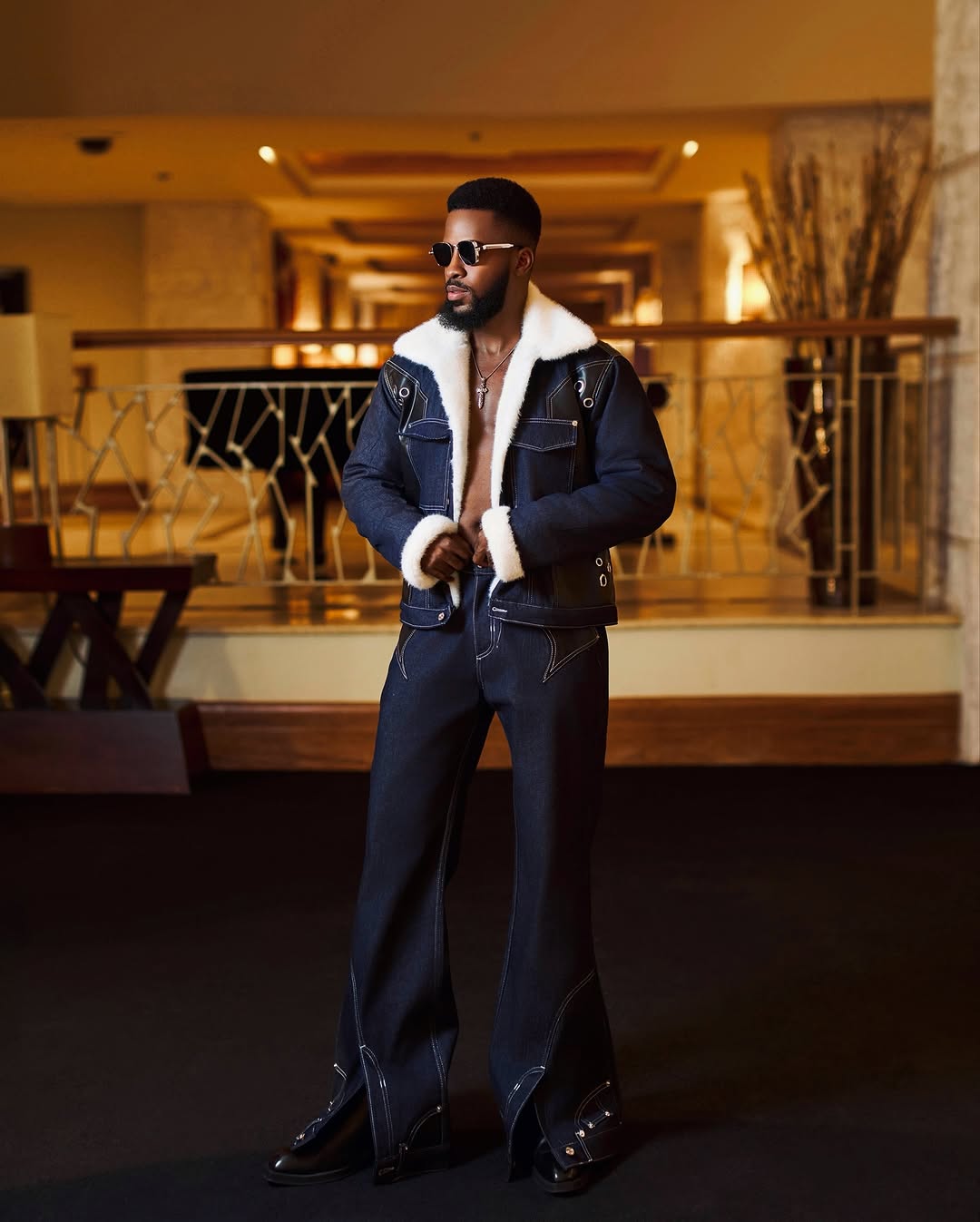
Leading up to LFW 2025, Faminu had already achieved significant career milestones, confirming his status beyond mere attendance lists. In May 2025, he became the first Nigerian man to win the prestigious Amstel Malta Sleek MVP Award for Best Dressed Man at the Africa Magic Viewers’ Choice Awards (AMVCA), solidifying his reputation among fashion critics and the public alike. His long history with LFW, which dates back to 2015, makes his 2025 appearance less about debut and more about sustained, critical curation.
Faminu’s elevated visibility in 2025 transforms his participation into a highly strategic endeavor for the entire Nigerian fashion ecosystem. When a figure who consistently receives “Best Dressed” acclaim chooses to wear a local designer, it converts his personal brand capital into immediate commercial validation for that brand. His decision to utilize his platform during LFW 2025 to showcase multiple Nigerian designers—including LFJ, Orange Culture, and Wanni Fuga—is a deliberate action that extends far beyond personal expression. It serves as a crucial endorsement, translating local high fashion into global editorial and consumer recognition, a function perfectly aligned with LFW’s core objective to propel African designers onto the international stage. He acts as a critical bridge, leveraging his influence to ensure local creative prowess achieves international commercial viability.
The Scintillating Transparency of LFJ’s “Orient of Africa

Faminu began his LFW 2025 season with a powerful runway moment, stepping out in a highly architectural, head-to-toe white ensemble. This outfit featured sheer, high-waisted trousers paired with a matching crinkled jacket/shirt, an “Off the Runway Piece” from LFJ’s debut Menswear collection, “Orient of Africa”.1 The fabrication was the defining element: a textured, almost organza-like material that granted the normally structured co-ord a fluid, avant-garde appearance that moved with every step.


Outfit: @Ifjofficial
The styling was a deliberate subversion of traditional formality. The jacket was worn open, revealing an exposed chest, thereby injecting a highly sensual element into the predominantly minimalist look. This softness and transparency were sharply anchored by high-contrast accessories: a wide-brimmed black fedora and dark sunglasses provided geometric definition and an edgy finish to the ethereal white structure.
The Golden Testament of Orange Culture

The second look was perhaps the most regal and editorially significant statement of Faminu’s week: a breathtaking ensemble explicitly credited as an Orange Culture Masterpiece. The centerpiece was an immense, floor-length cape crafted from voluminous gold satin or silk. The fabric was draped and styled to create exaggerated shoulders and a sense of cascading movement, reminiscent of ceremonial robes. This luxurious garment was worn over a simple, stark white sleeveless top, featuring a circular orange motif that provided a subtle color-pop anchor, and sharp black tailored trousers.


Photography: @koal_world
The look was documented against a warm, monolithic background, emphasizing the sculptural quality of the gold drape. This staging, captured by Koal Artistry, indicates the outfit was intended as a high-concept piece meant purely for editorial and red-carpet impact, showcasing the apex of Nigerian avant-garde fashion.
Monochromatic Pattern and Wide Trousers

Look 3 shifted to a monochromatic palette but maintained the theme of dramatic volume. The outfit consisted of a striking black-and-white patterned outerwear piece resembling an oversized shawl or blanket coat, featuring a sharp, large-scale checked pattern This generous piece was draped over a dark, sheer inner top, likely mesh or net, offering another deliberate glimpse of skin. The entire top assembly was grounded by extremely wide-leg, high-waisted black tailored trousers.


The mastery of this ensemble lies in its proportional balance. The dramatic volume of the sweeping trousers; a key trend defining LFW 2025 street style, created a clean vertical line that contained the busy, graphic patterning and heavy layering of the upper garment. This juxtaposition of volume and graphic intensity created a high-impact, immediately memorable street moment designed specifically for viral photography.
Layered Sophistication and the Architectural Overcoat

This look showcased Faminu’s exceptional ability to synthesize traditional elements with formal Western tailoring. The foundation was a floor-length tunic or kaftan in a deep maroon color, which offered an uninterrupted vertical line and was cinched high at the neck with a matching fabric tie. This traditional silhouette was dramatically offset by a structured, three-quarter length overcoat in a patterned beige or light-brown check fabric. The ensemble was completed by a wide-brimmed fedora, this time featuring a red accent on the brim that deliberately echoed the maroon tunic beneath.


Photography: @theseyekehinde
This outfit is defined by its proportional play. The inner tunic provides fluidity and cultural grounding, while the structured, rigid lines of the Western overcoat introduce an element of architectural formality.
Wanni Fuga and the New African Print

For this final look, Faminu’s engagement with the LFW calendar included attendance at the Wanni Fuga SS26 show, for which he wore an ensemble defined by bold colour and complex pattern mixing. The core of the outfit was a voluminous, floor-length outer robe or kimono in a rich, solid, saturated red hue. This robe was worn open, revealing high-waisted trousers featuring an exceptionally bold, graphic print. The print was geometric and intricate, primarily using blue and reddish-orange tones.

Outfit: @wannifuga
The accessories for this look amplified the opulent feel, including multiple prominent gold chains worn around the neck and chest, enhancing the cultural weight and luxury of the presentation.
Akin Faminu’s presence at Lagos Fashion Week 2025 was a definitive commentary on the future trajectory of African high fashion. He operated not just as an attendee but as a critical curator and validator of the sartorial landscape.
His style portfolio confirmed that the LFW 2025 theme, “In Full Bloom,” represents a moment of explosive, sophisticated growth characterized by boundary-pushing design. The fundamental blueprint Faminu provided for contemporary African menswear is clear: the style must be historically informed, referencing rich Nigerian silhouettes and textiles, but it must be aggressively modern, utilizing radical volume, textural experimentation, and a progressive acceptance of non-traditional aesthetics, such as sheer fabric and gender-fluid drapery.
Ultimately, Faminu’s LFW 2025 looks serve as an influential compass, directing the gaze of the global fashion community toward Nigerian design excellence and cementing his reputation as the pivotal force driving African menswear innovation.