
Ijebu-Ode, Ogun State – May 29, 2026
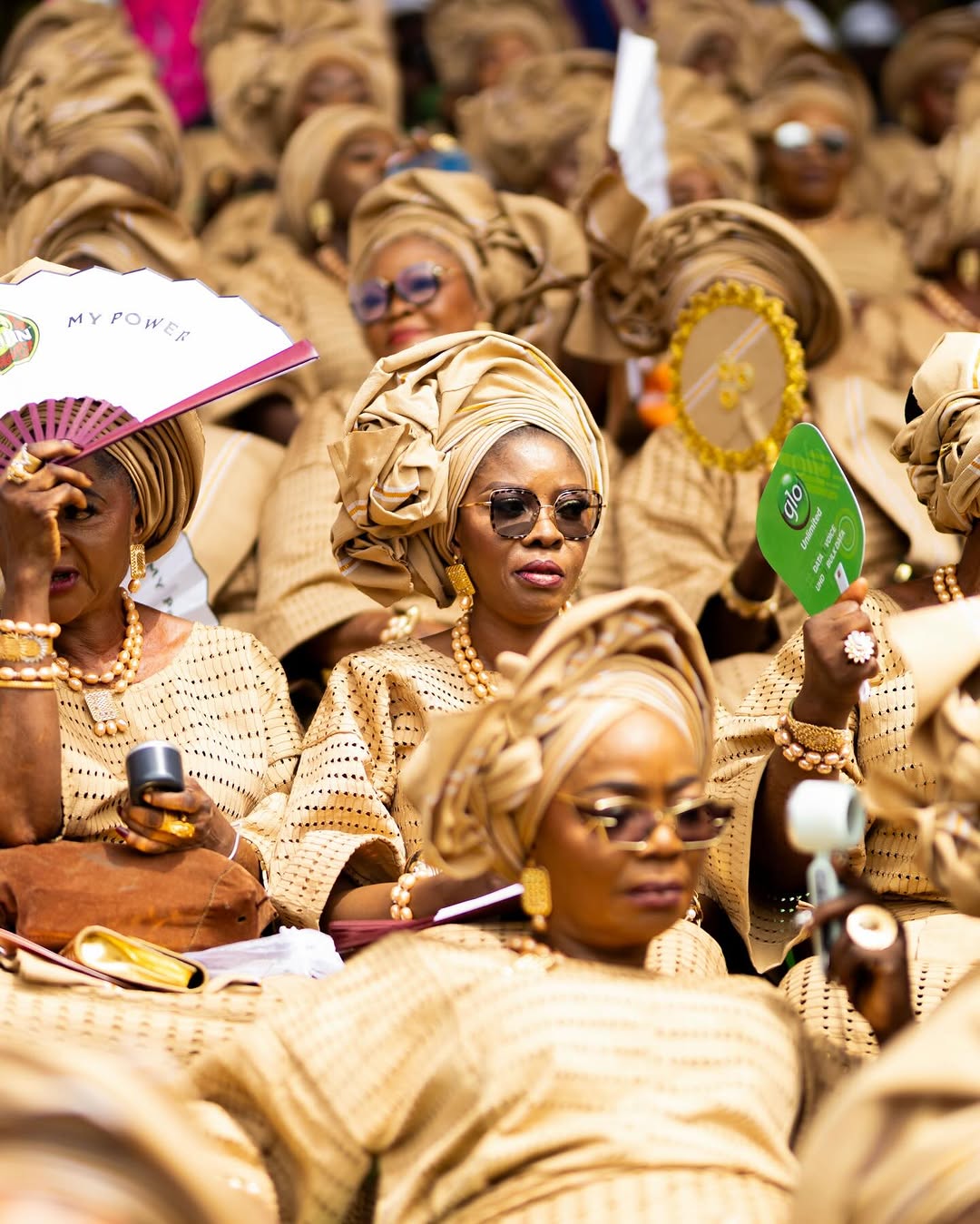
On the morning of Friday, May 29, 2026, the ancient town of Ijebu-Ode stirred before sunrise. Long before the palace gates opened at the Itoro Centre, the roads into town were already thick with convoy. People in flowing hand-embroidered agbadas, geles wound high above their heads, and lace aso-oke coordinated down to the last bead poured into Ogun State from Lagos, Abuja, Port Harcourt and from London, Houston, and Toronto. This was Ojude Oba. And this year, it meant something more.


For the first time in 65 years, the festival gathered without its most devoted custodian; Oba Sikiru Kayode Adetona, the Awujale and Paramount Ruler of Ijebuland, who passed away on July 13, 2025, aged 91. This year’s edition was held in his honour, themed “Ojude Oba 2026: Celebrating the Legacy of Oba Sikiru Adetona.” His absence loomed over every moment. And yet the drums did not stop. The horses still galloped. The age-grades still arrived in their hundreds, dressed to stun. Ojude Oba 2026 was a people’s act of grief transformed into glory.
So, What Exactly Is Ojude Oba?
If you’ve never been, the name is a good place to start. “Ojude Oba” is Yoruba for “the King’s Forecourt” and that’s precisely what it is: a grand annual gathering of the Ijebu people at the Awujale’s palace in Ijebu-Ode, Ogun State, held every year on the third day after Eid el-Adha (known in Yorubaland as Ileya).


It features over 90 regberegbe age-grade processions, ornately dressed horse riders from the Balogun families, and some of the most spectacular traditional fashion in Nigeria, drawing over 100,000 attendees to the Itoro Centre each year.
Politicians, celebrities, business titans, diaspora returnees, fashion obsessives, photographers, and culture lovers all converge on this one town, on this one day, every single year. It is one of the biggest cultural events on the African continent and it has been going for nearly 150 years.

Where It All Began
The roots of Ojude Oba trace back to the 19th century when Islam was introduced to Ijebuland, around 1879, during the reign of Awujale Afidipote. The king allowed the new Muslim converts to practise their faith freely without persecution or interference. In gratitude, Muslims paid homage to the king for the religious freedom they enjoyed.
At the centre of this story is one remarkable man: Chief Balogun Kuku: war chief, arms merchant, political tactician, and the founder of what would become Ojude Oba. When Christian missionaries arrived in Ijebu-Ode and demanded monogamy as a condition of conversion, Balogun Kuku; a man of many wives and great household; chose Islam instead. But that choice came with a sacrifice: he could no longer join the traditional Odeda rites. Instead, he proposed a new festival to honour the Awujale in a manner consistent with Islam, which was first called Ita-Oba, held right after the Eid-Al-Adha celebration.


That modest gathering of grateful converts grew; slowly, then suddenly into the most spectacular cultural event in southwestern Nigeria.
It’s also worth knowing that the tradition of Ijebu people gathering to honour their Awujale goes back even further. The festival in its present format is over three hundred years old, instituted long before any modern government existed. It is one of only three festivals unique to Ijebuland; alongside Obinrin Ojowu and Agemo and it is purely Ijebu affairs, pushing all differences into the background as if they don’t exist.
The Regberegbe: The Soul of the Festival
If there is one thing that defines Ojude Oba above everything else, it is the “Regberegbe”; the age-grade groups, also known as “Wompari”, that form the backbone of the procession.
These groups are made up of people born within the same three-year window, tracing their origins back to the 18th century. As they parade, each group honours the monarch with unique gifts.


Each group shows up in fully coordinated outfits: lace, brocade, aso-oke, adire; planned up to a year in advance. No outfit is repeated, ever. To wear last year’s lace is to commit cultural fashion suicide. Every group comes with coordinated attire, hired drummers, and choreographed dance steps. Even the horses are adorned: beads, fabrics, feathers, nothing is off limits.
But this isn’t just about looking good. Each Regberegbe projects its collective achievements; schools or health projects it funds for Ijebuland and receives recognition from the Awujale. They compete informally in costume and creativity, attempting to outshine each other through elaborate costumes and performances. This spirit of friendly competition reinforces social cohesion: young people learn teamwork and tradition through preparation, while elders maintain ties with peers.
It is fashion as civic participation. It is community pride made visible.
The Horses, the Drums, and the Families of Warriors
Alongside the Regberegbe, the “Balogun family horsemen” are perhaps the most visually arresting sight at Ojude Oba. Turbaned, cloaked in embroidered robes, mounted on horses dressed in beads and hand-stitched saddle-covers, these riders are the living descendants of the warrior merchants who built and defended 19th-century Ijebu. When they thunder across the festival grounds, they are not performing for tourists; they are re-enacting a historical identity, one lineage at a time.

The talking drums, the crowd roars, the precision of the formations; it is one of those rare moments where heritage stops being abstract and becomes viscerally, physically real.
A Festival of Everyone
Here is perhaps the most quietly radical thing about Ojude Oba: a festival born from Islamic gratitude for religious tolerance has become one of Nigeria’s greatest examples of interfaith unity.
Although Ojude Oba has evolved into a world-famous cultural and fashion event attended by people of different religions and backgrounds, it still stands as a powerful symbol of peaceful coexistence, religious harmony, and mutual respect among the people of Ijebuland. The Imam opens proceedings. Christian dignitaries sit in the stands. Traditional title-holders take their places at the Awujale Pavilion. Nobody checks your faith at the gate. That openness was baked in from the very beginning and it is what has allowed the festival to grow without losing itself.

2026: Celebrating a King Who Made It Global
Oba Sikiru Kayode Adetona played a monumental role in nurturing the festival and elevating it to national prominence. Since his ascension to the throne in 1960, he led with vision, wisdom, and an unwavering commitment to preserving Ijebu culture. Under his reign, the festival transformed from a local Islamic observance to a globally recognised cultural event. His efforts to institutionalise the Regberegbe system, modernise the palace infrastructure, and promote Ijebu unity had a lasting impact.
When he died last July, rumours swirled that the 2026 festival would be cancelled. The Organising Committee shut that down quickly. According to festival coordinator Professor Fassy Yusuf, the late Awujale had made it clear before his death that Ojude Oba must continue irrespective of any royal transition; he considered it a sacred symbol of the people’s heritage.

And so on May 29, the people came. Arrays of beautifully adorned men, women, and youths from all walks of life thronged Ijebu-Ode, transforming the city into a vibrant panorama of colour, glamour, heritage, and tradition. Governor Dapo Abiodun was there. Seyi Tinubu was there. The diaspora was there. The Regberegbe were there; over 90 groups, every single one of them dressed like a statement.
The Balogun horses thundered. The drums rolled. The oriki rang out across the forecourt.
Significance
It would be easy to write about Ojude Oba purely as spectacle and the spectacle is genuinely extraordinary. But the festival is doing something deeper than dazzling its audience.
Every year, it answers a question that quietly haunts every culture: “are we still here?”

The Regberegbe answer yes; in 90 coordinated groups, in matching geles, in fabrics nobody wore last year. The horsemen answer yes; in turbans and beads and the thunder of hooves. The diaspora answers yes; by getting on planes from London and Houston to come home for this one day. As Professor Yusuf put it, beyond the spectacle, Ojude Oba is truly about continuity: family, enterprise, prestige, and community memory.
In 2026, with the throne empty and the longest-reigning Awujale in Ijebu history freshly in the ancestors’ company, that answer rang out louder than ever.
The King’s Forecourt endures. And so do the people who fill it.
Oba waoninu re. Kaabiyesi o.
Long live the King. Long live the culture he served.